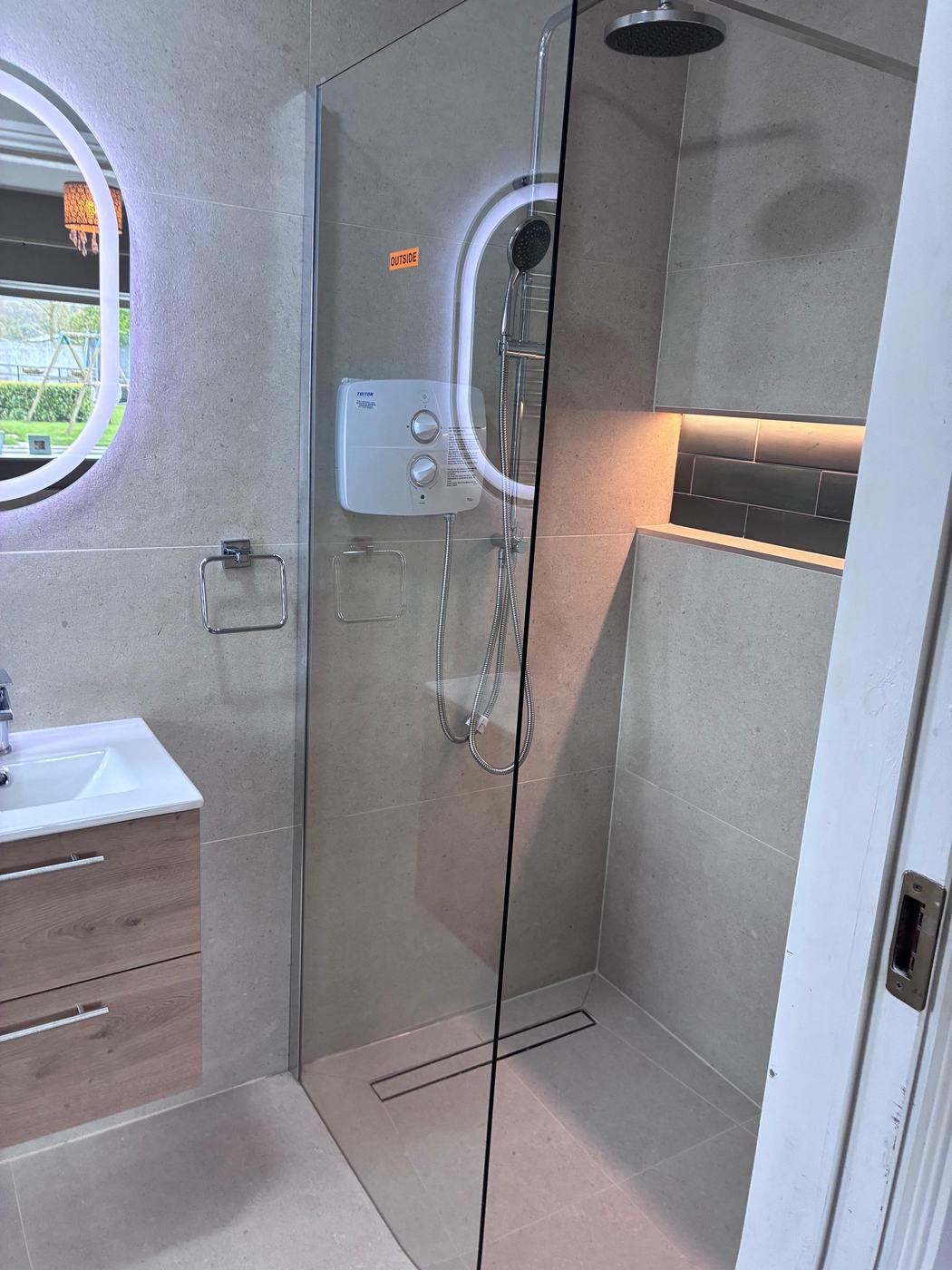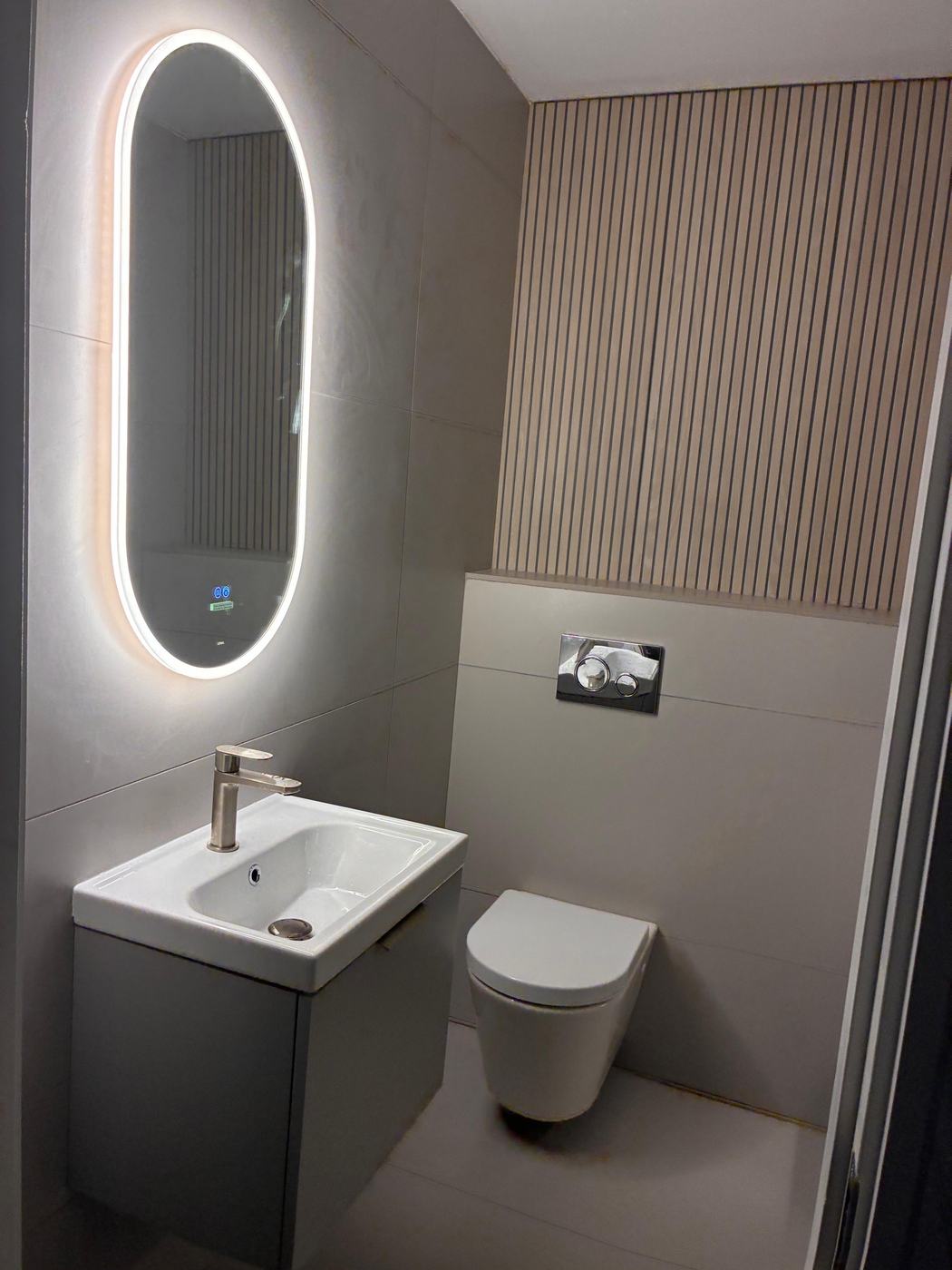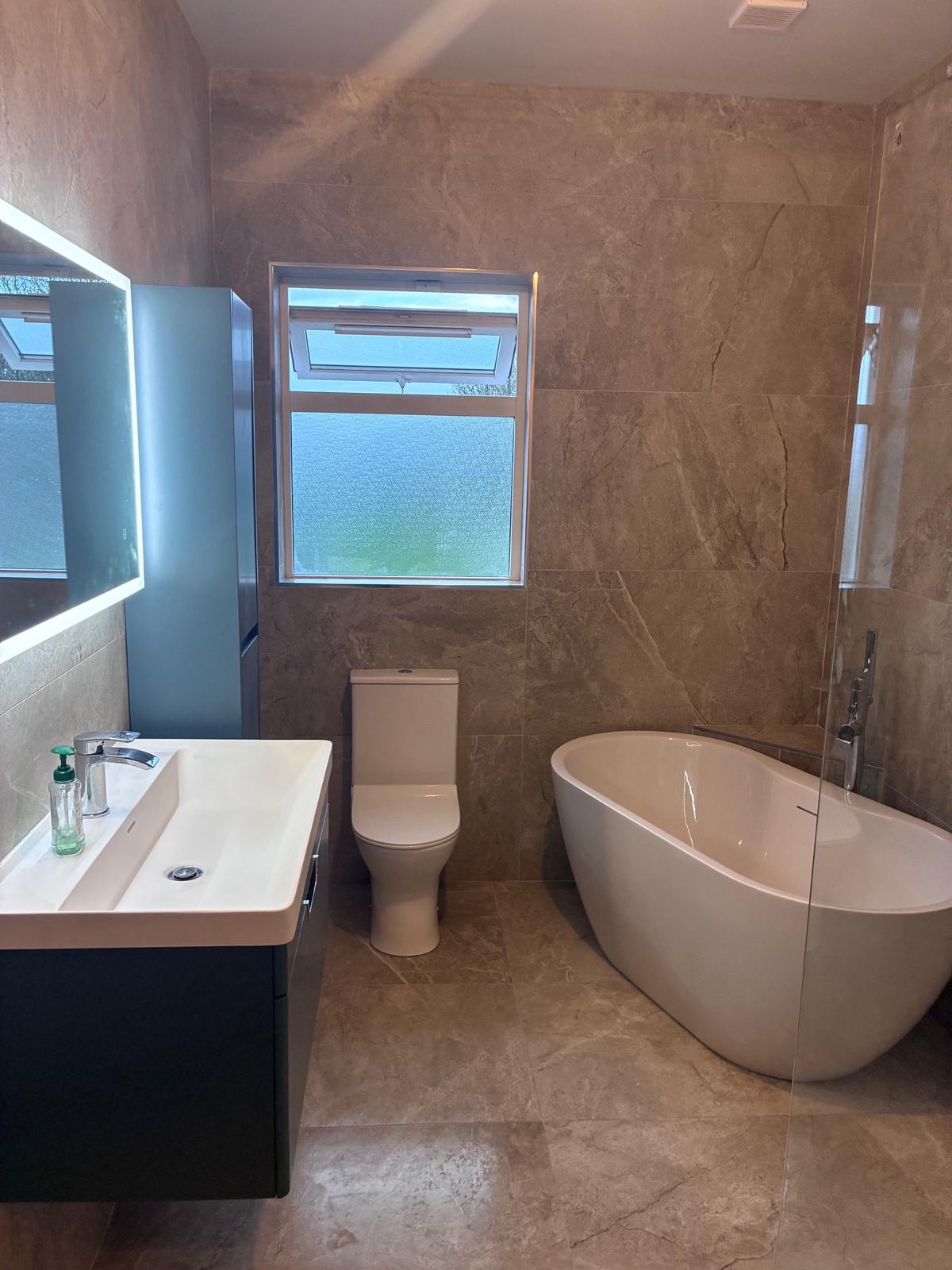
We get asked for a ballpark price on the phone every week, and the honest answer is always the same: it depends on what you want to do with the room. Two bathrooms the same size can come in thousands apart. Here is where the money actually goes, so you can decide where to spend and where to hold back.
1. How much is moving
Keeping the toilet, basin and shower where they are is the single biggest saving in any renovation. Moving a WC means moving the soil pipe, which often means lifting floorboards or chasing walls. Moving a shower to a different wall means new hot and cold runs and a new drain position. None of it is impossible, but every relocation adds labour and sometimes a day on site.
If the existing layout works, keep it and spend the money on finishes instead. If the layout genuinely does not work, moving things is worth it, because you will live with the room for fifteen years.
2. The condition of what is underneath
We never know for certain what is behind the old tiles until they come off. Blown plaster, old timber that has been wet for years, or a floor that is well out of level all need sorting before new tile goes down. This is why a proper quote includes an allowance for preparation, and why we always tell you what we found as soon as the strip-out is done.
3. Tile format and layout
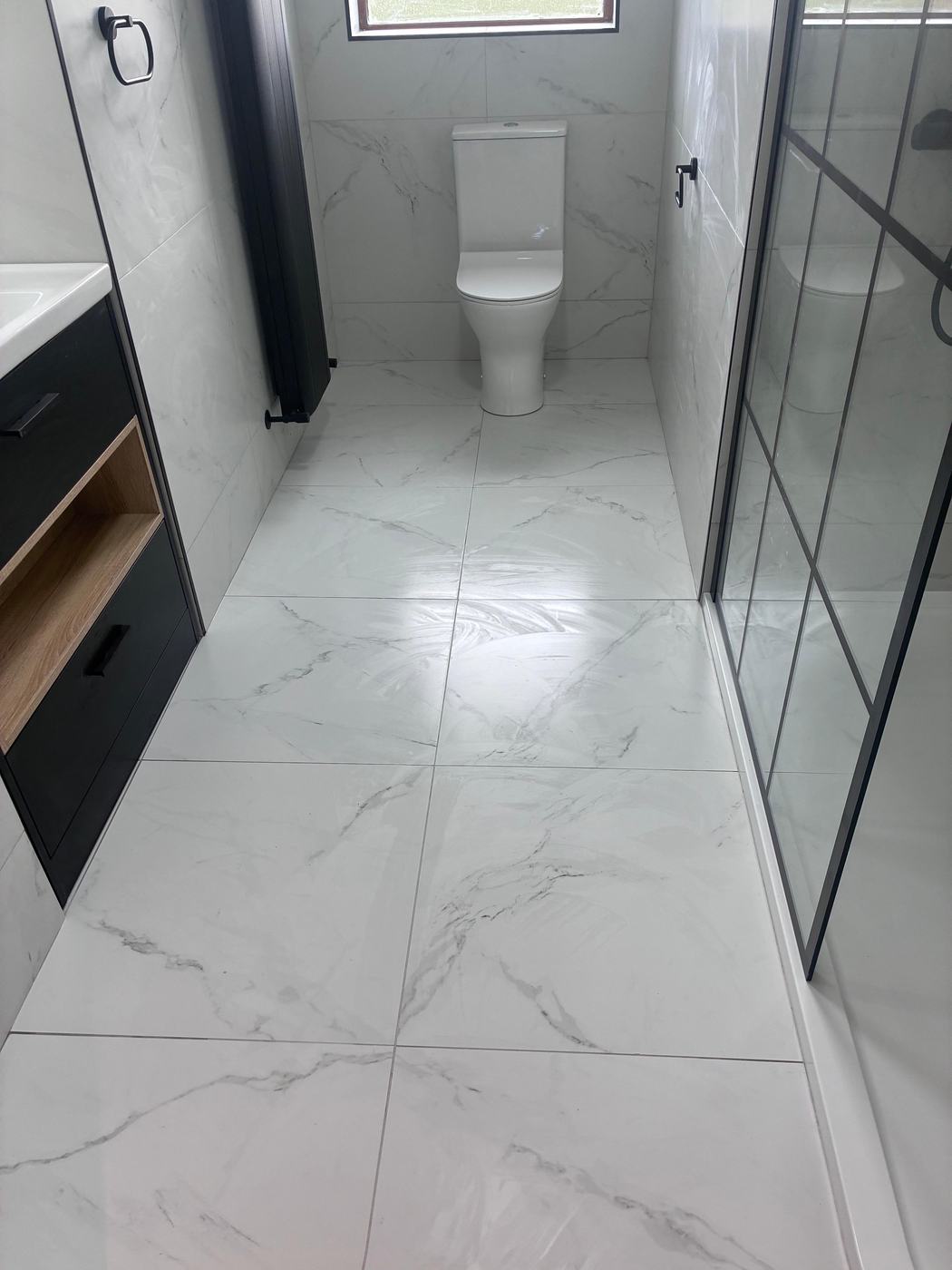
Large-format porcelain, the 600 by 1200 slabs you see across our gallery, gives a cleaner look with fewer grout lines, but it takes longer to set out and needs flatter walls. Patterned tiles, herringbone and anything laid on the diagonal all add cutting time. Mitred external corners, where two tiles meet at a sharp edge with no trim, are a hallmark of a quality job and they take time to get right.
4. The sanitaryware and brassware
This is where the range is widest. A wall-hung WC with a concealed cistern costs more than a close-coupled one, both to buy and to frame in, but it transforms a small room. Brushed brass and copper finishes sit above chrome and matt black. A freestanding bath needs a floor-standing tap and often a reinforced floor.
Our advice: spend on the things you touch every day, such as the shower valve, the tap and the toilet seat, and save on the things you do not, such as the cistern hidden in the wall.
5. The extras that get added late
Underfloor heating, a second shower niche, a demister mirror, a second towel rail. All of these are cheaper to add at the planning stage than after the first-fix is done. Tell us everything you are considering at the site visit, even if you are not sure, and we will price it as an option so you can decide with the full picture.
Want a real number for your room?
Send us a few photos and rough measurements and we will give you an honest range before we even visit. No charge, no obligation.
Get a free quoteWhere you can save without it showing
- Keep the layout. The biggest saving of all.
- One tile for walls and floor. Fewer cuts, fewer trims, and the room looks bigger.
- Standard tray sizes. A made-to-measure tray can cost double.
- Choose the finish, then the brand. Mid-range brassware in a good finish looks the same as the expensive stuff on the wall.
Every bathroom we quote is itemised, so you can see exactly what each choice is costing and adjust before anything is ordered.